

Somewhere in Le Locle, someone kept a technical drawing in a drawer for decades. Yes, just a drawer, and not filed in some climate-controlled vault with the rest of the brand's institutional memory. The drawing belonged to Ephrem Jobin, the watchmaker who in the late 1940s designed the calibre 135 at the request of Zenith's then-technical director Charles Ziegler, and it had been sitting there, in somebody's desk, while the man who made it went on to live another fifty-odd years without being asked about it. When Zenith's Chief Product Officer Romain Marietta finally showed Jobin a framed reproduction at a birthday celebration, Jobin was turning 100, probably the oldest living watchmaker of his time, and the old man looked at it and said "I don't remember what I had for lunch, but I remember the plans for the 135 calibre." Ephrem Jobin died in 2014, at 105.
I keep coming back to that story because it describes a relationship between a person and the thing they made with precision. Jobin's memory was structural. The calibre lived in him the way a building lives in the mind of its architect: as a set of problems that were solved in a specific way, and whose solutions he apparently could not forget even as everything else went soft. The G.F.J. is, in theory, a watch built to honour that movement. What it actually does is ask whether precision, as an idea, still conveys the gravity it had when Jobin was in a room arguing with chronometry specialists about the geometry of a gear train.
That argument, by the way, was a real one. Jobin's insight for the 135 was to relocate the centre wheel, offsetting it from the middle of the movement to free up space for an unusually large balance wheel. The balance wheel in the 135-O, the competition-grade version developed specifically for observatory trials, measured 14mm in diameter, with an inertia nine times that of the balance in the El Primero. Observatory chronometry was about 30 days of submission to external timing authorities at institutions like the Neuchâtel Observatory, where movements were tested across temperature ranges, positions, and conditions with no relation to how a watch looked on a wrist. The calibre 135-O won 235 prizes under those conditions, including five consecutive first-place finishes in the wristwatch category between 1950 and 1954, a record that has held ever since. The results depended on elite chronométriers, René Gygax and Charles Fleck, whose work regulating and adjusting each piece made a great calibre into an unbeatable one.
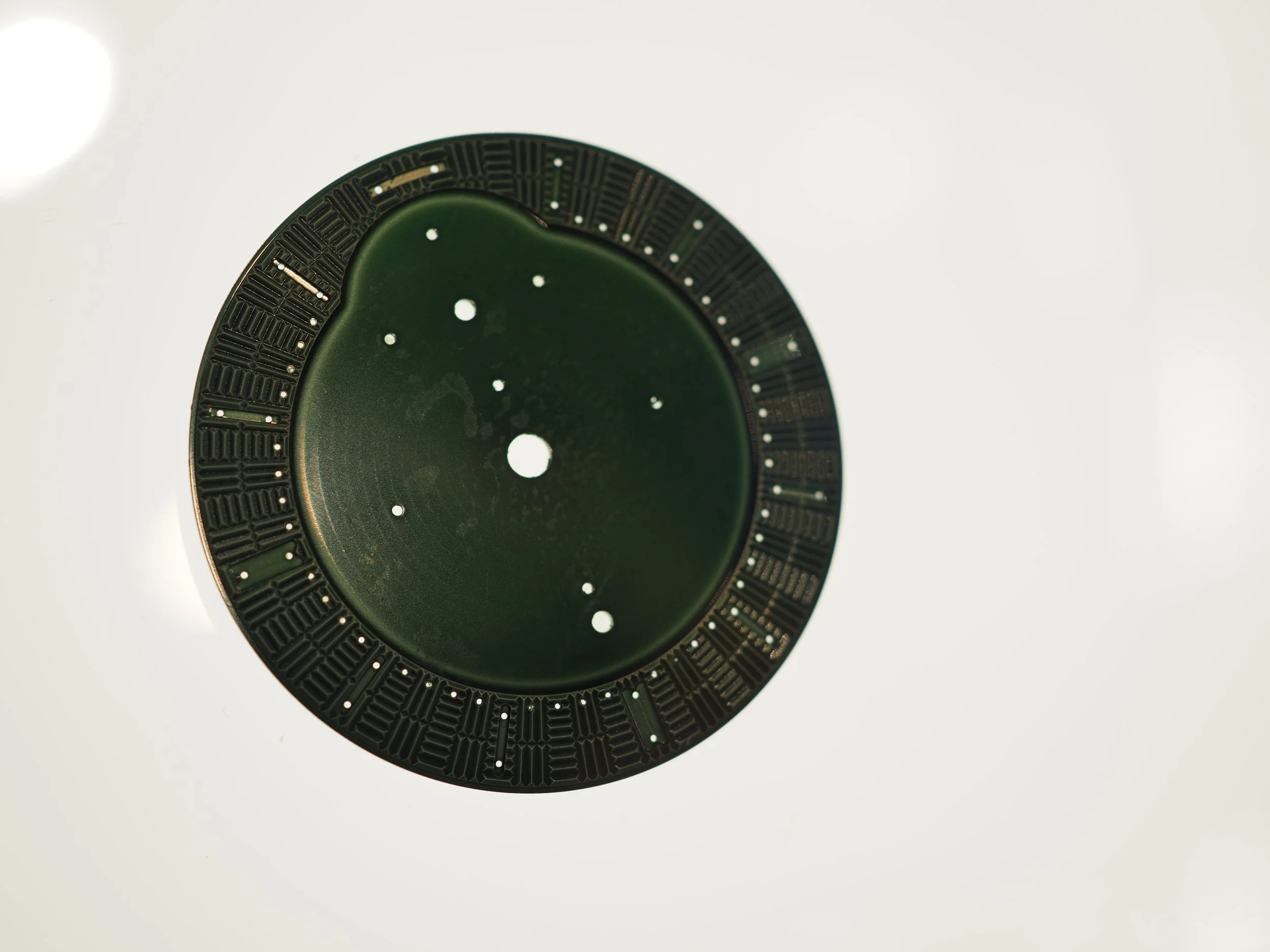
Zenith has spent most of its modern life being known for a different type of precision. 36,000 vibrations per hour, the El Primero, high-frequency chronographs, the whole architecture of speed. The G.F.J. is the brand's attempt to reintroduce itself to the part of its history that preceded that story. Georges Favre-Jacot, whose initials the collection bears, founded the manufacture in 1865 with the ambition of bringing all watchmaking disciplines under one roof, an unusual idea at the time, when Swiss production ran on the établissage model of distributed cottage labour. His aspiration was the 'perfect watch,' which is where the name Zenith came from. The highest point in the sky, a destination implied by the name itself. Those initials, G.F.J., are spelled out in brick lettering across the facade of the Le Locle manufacture, and the brick guilloché pattern running along the outer chapter ring of every dial in this collection is a direct translation of that architecture into surface texture. The wall of the building becomes the decoration of the movement bridges and the dial simultaneously. I am normally suspicious of that kind of recursive symbolism in watchmaking, because it’s usually deployed to paper over a thinner idea. Here, it does not feel thin.
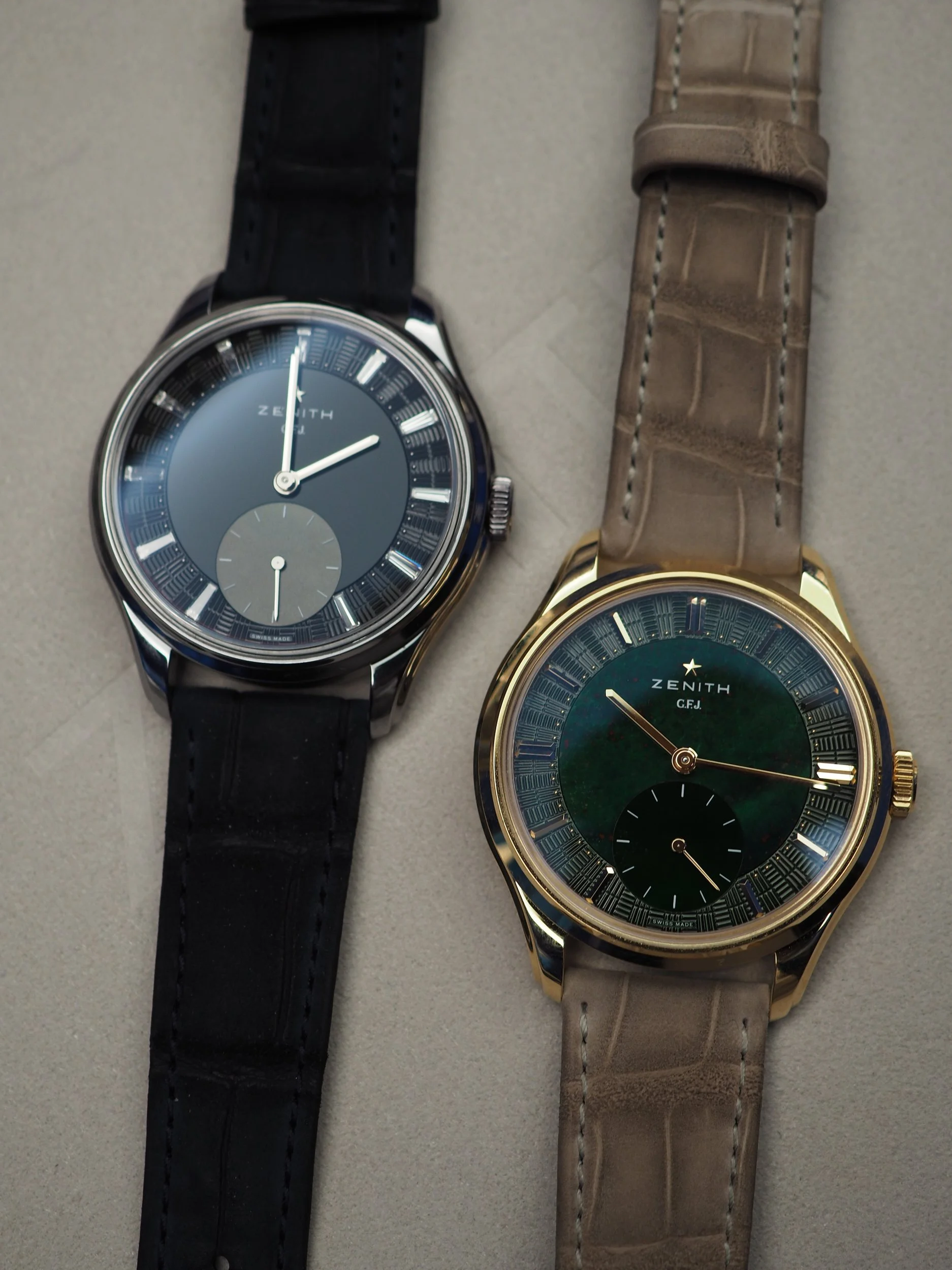
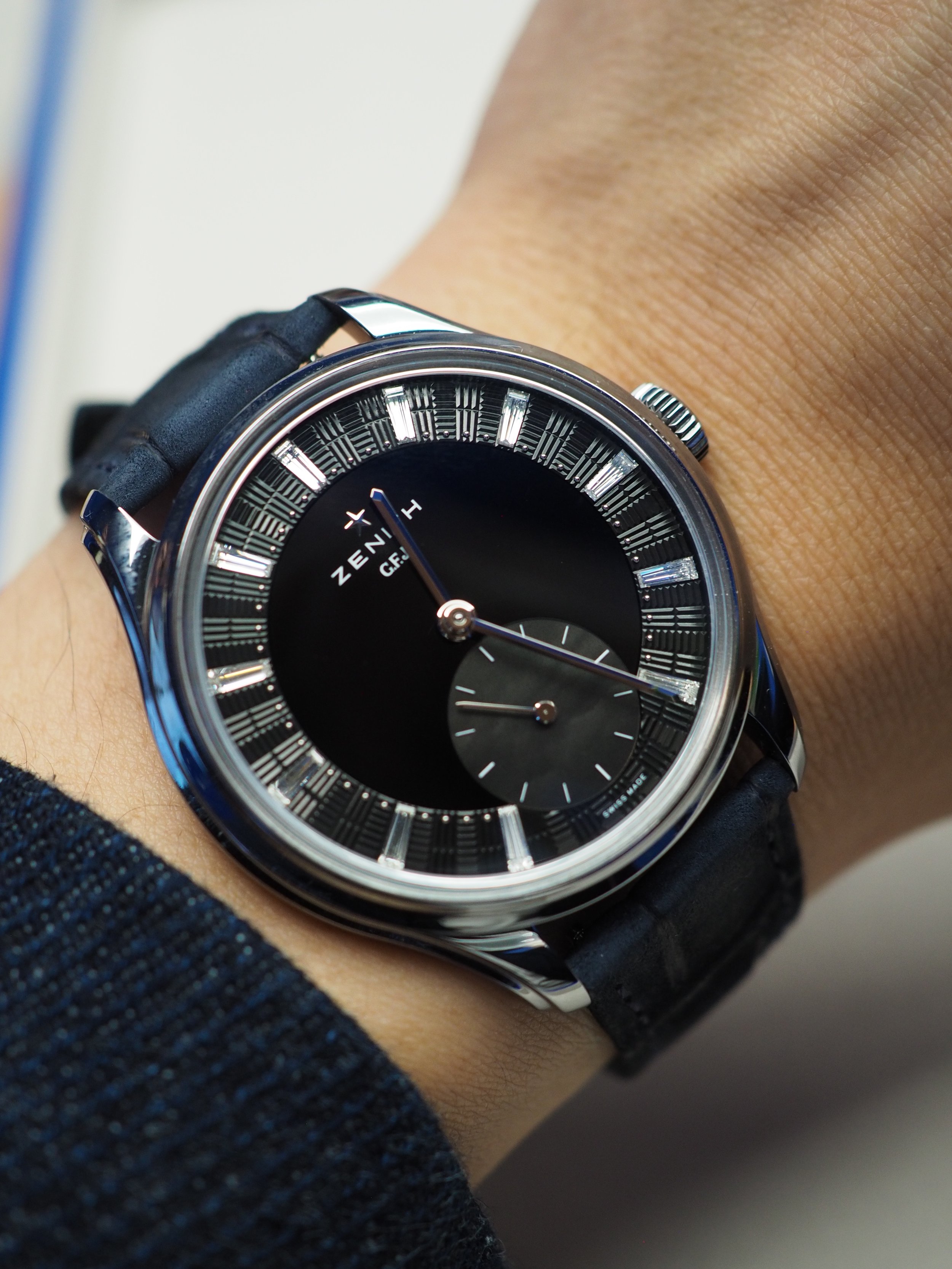
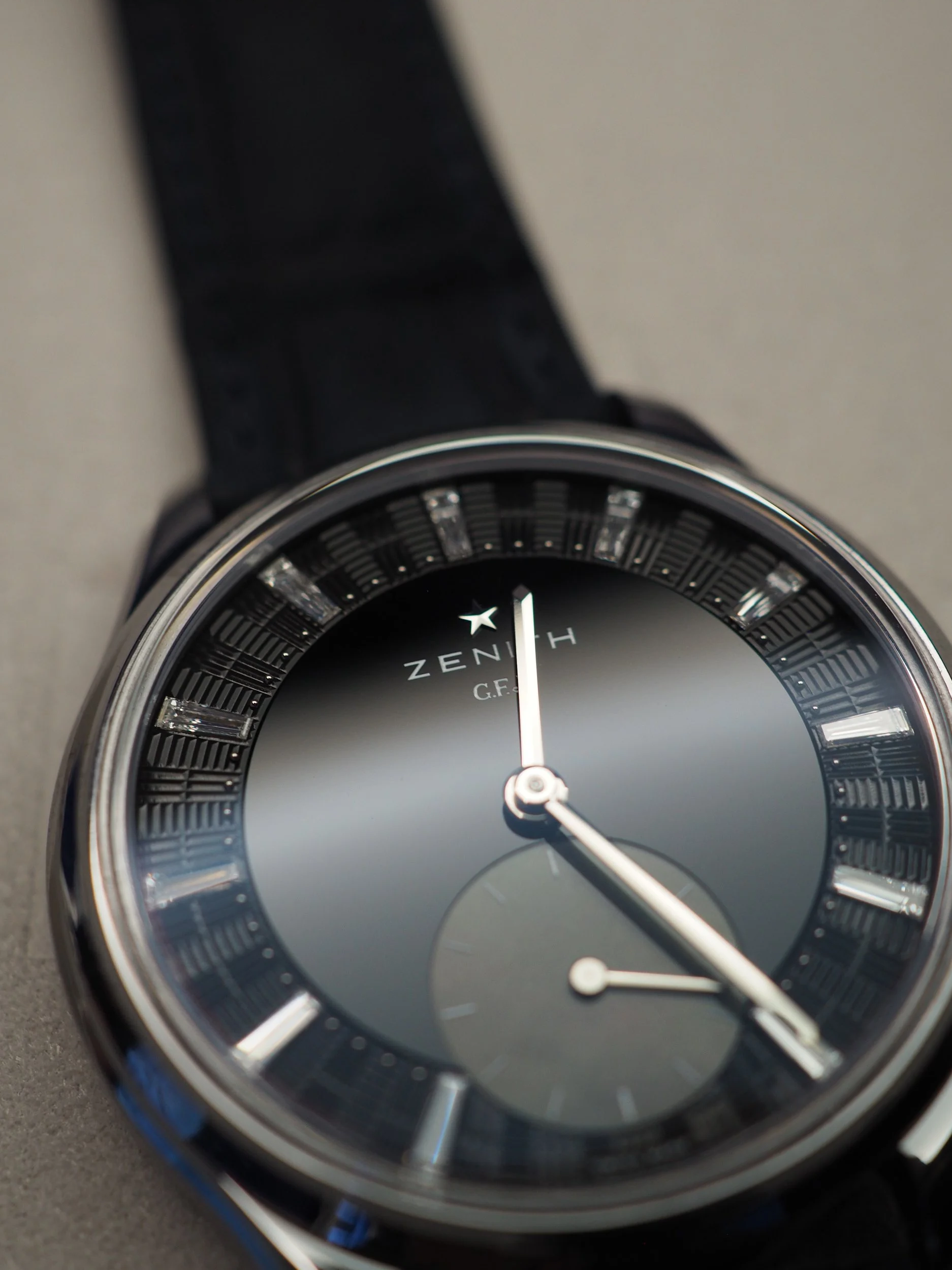
The collection currently exists in three versions, and the way they relate to each other is worth thinking about before you get to the material specifics of any one of them. The seeds for the G.F.J. were planted back in 2022 with a collaboration between Zenith, Phillips, and Kari Voutilainen, in which ten vintage 135-O movements from the 1950–1954 winning years were restored and cased in an ultra-exclusive limited edition. The founding piece, released at Watches & Wonders 2025, is a 160-piece limited edition in 950 platinum, timed to the brand's 160th anniversary. Its dial is a three-part construction: a brick guilloché chapter ring, a lapis lazuli centre, and a small seconds register in blue mother-of-pearl at six o'clock. At Watches & Wonders 2026, two new versions were released, this time a yellow gold case with a bloodstone dial, limited to 161 pieces, and a tantalum case with black onyx and diamond indices, limited to 20. All three run the same rebuilt calibre 135, manually wound at 2.5 Hz, with a 72-hour power reserve that was 40 hours in the original, regulated to within plus or minus two seconds per day. All three sit in a 39.15mm case with a stepped bezel and curved stepped lugs, 10.5mm thick, water resistant to 50 metres, which is an unexpected figure for a watch of this character.
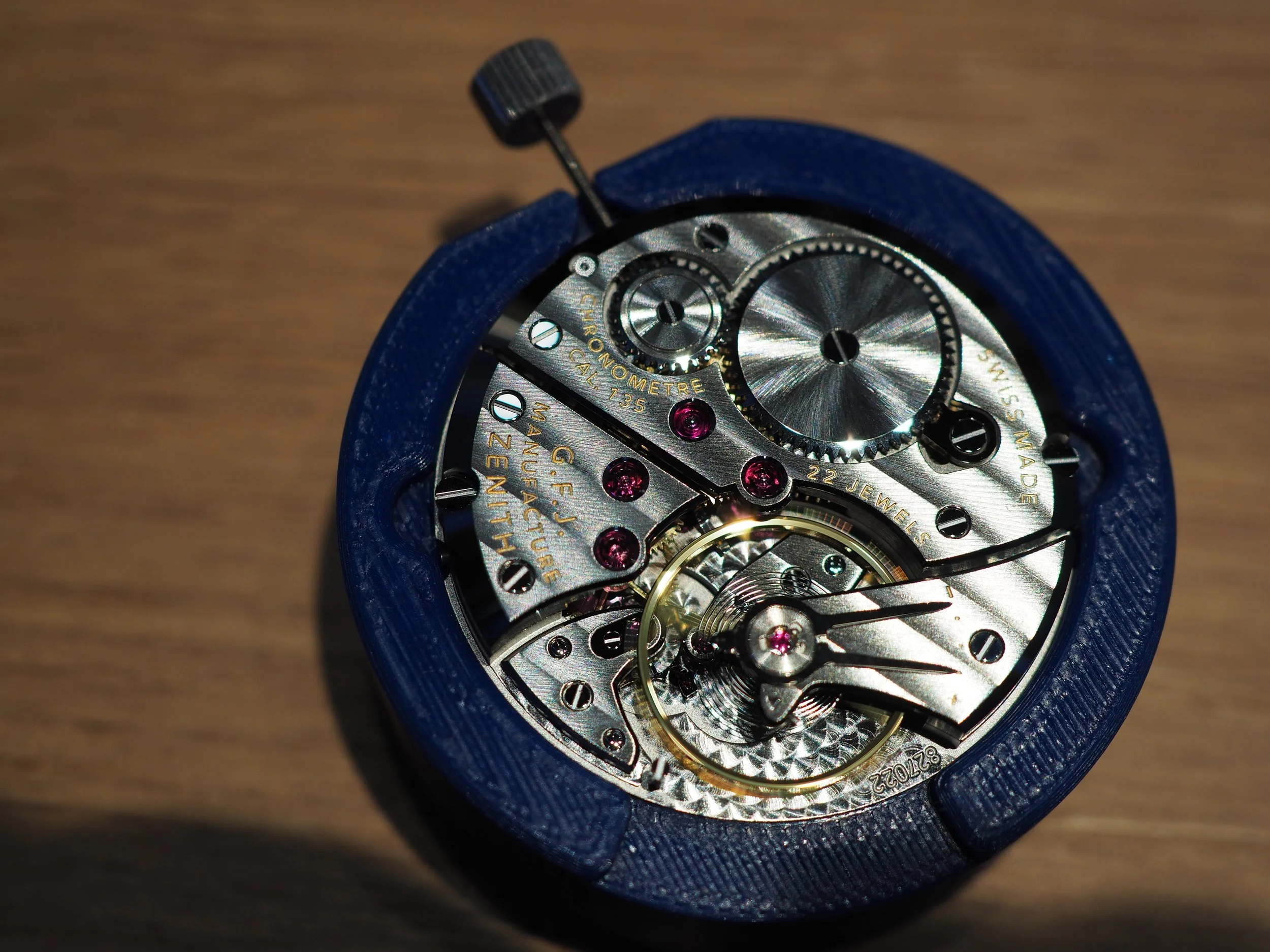
That naturally raises another question of how much of the original calibre actually survives beneath the bridges? At the recent Watches & Wonders, I put that question to Zenith's Technical Director, David Serra. His answer was concise. "The movement was entirely redeveloped, component by component, in order to improve performance without compromising the identity of the original calibre."
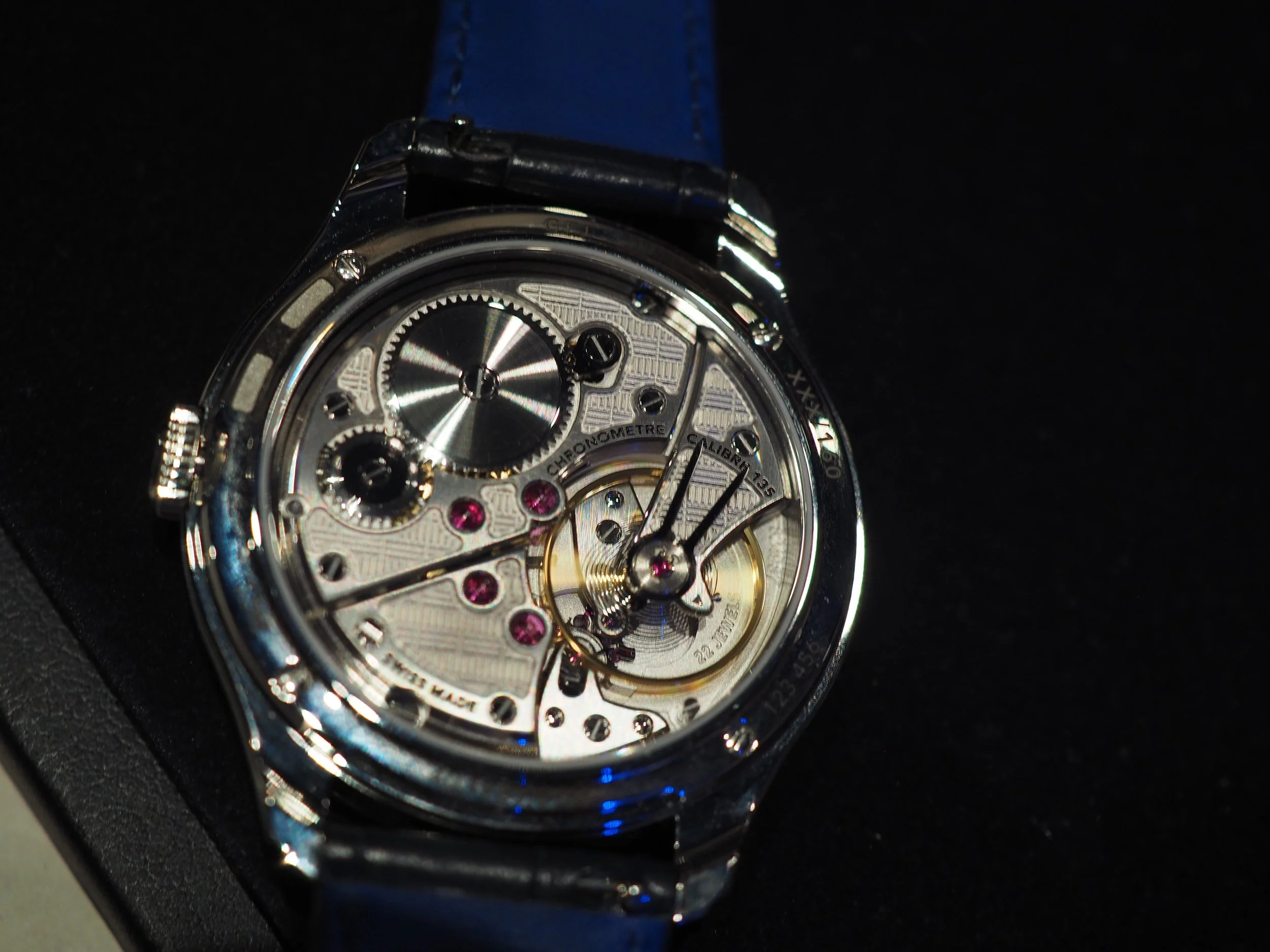
The emphasis on identity is telling. The architecture that made the 135 one of the great observatory movements remains intact, but the movement itself was re-engineered to meet contemporary expectations for efficiency, reliability and chronometric performance. The goal was not to recreate a mid-century movement exactly as it was, but to carry its underlying principles into a modern calibre.
I want to resist ranking them, because ranking converts the collection into a product lineup and the writing into a buying guide. The three versions are more interesting as propositions about what precision watchmaking can look like when it is allowed to use colour and material as part of its argument, as something doing real work alongside the movement.
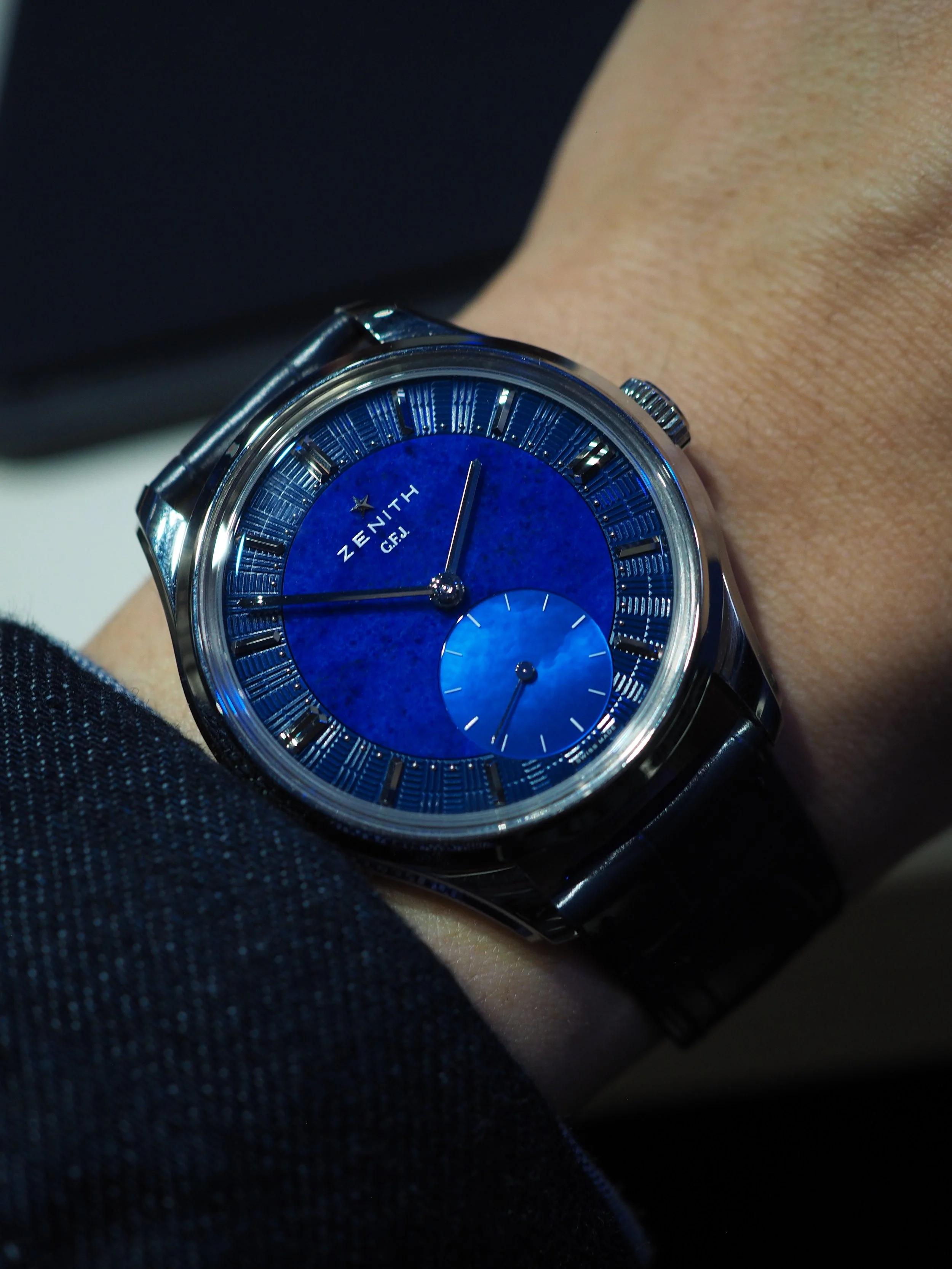
The platinum piece is the most composed. Lapis is a stone with a strong visual personality, but on this dial it works harder than it usually does because it is asked to coexist with two other textures, the guilloché ring and the mother-of-pearl sub-dial, and the result is a surface that does not resolve into a single impression from any angle. The blue shifts. The guilloché ring catches light differently depending on the direction you tilt the wrist. The mother-of-pearl at six moves between white and grey. At arm's length, the dial reads as simply blue and intricate. Up close, it is three separate objects that happen to be sharing space. I found this more interesting than I expected to, partly because the complexity is achieved through material selection, and that subtlety is consistent with what the watch is actually about.
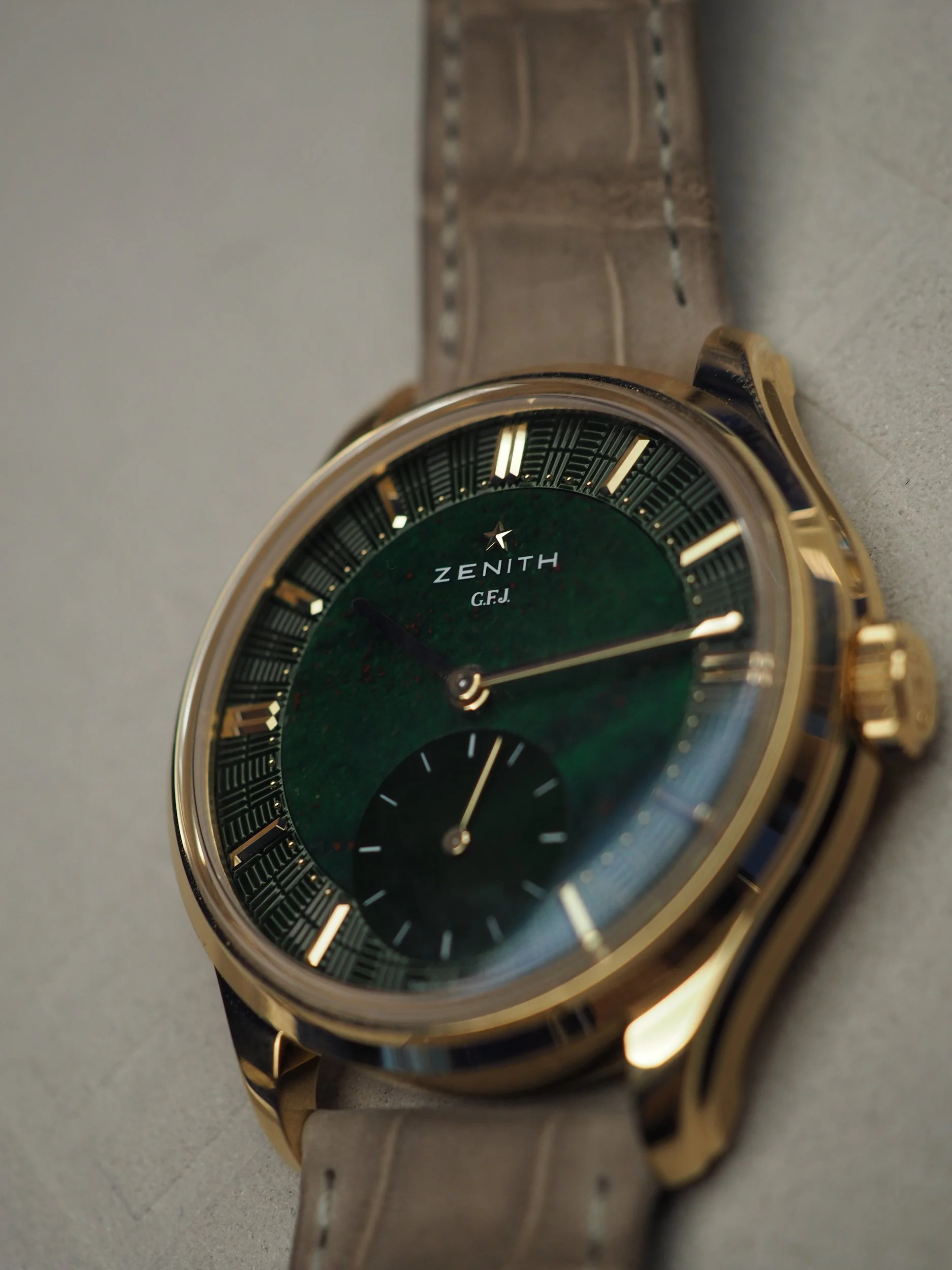
The yellow gold version with bloodstone is the one I keep returning to mentally. Bloodstone is green chalcedony with iron oxide inclusions that appear as red markings distributed unevenly across the surface. Every dial is different in a way that goes beyond the talking point, because the inclusions genuinely move across each stone differently, appearing dense in some lights and almost invisible in others. On a yellow gold case, the green reads warmer than it does against neutral metals, and the whole watch develops a kind of internal conversation between its components that feels discovered rather than designed. The applied yellow gold indices include 40 hand-applied beads as minute markers, which is the type of detail that does not read as excess when you see it in person, because the scale of each bead is small enough that together they function as texture. The bridges on this version carry broader Geneva stripes and refined hand-chamfering, with gold-coloured engravings. Seen through the caseback, the movement and the case and the dial are in the same tonal register, and the watch feels finished in the sense of complete.
The tantalum piece is the most extreme formal statement in the series and also the most intellectually consistent with the movement it contains. Tantalum is a dense, refractory metal with a blue-grey surface that absorbs light. It is also genuinely difficult to machine, with cutting speeds that have to be managed carefully and a tendency to work-harden under the wrong conditions. Zenith makes no secret of this difficulty, framing it explicitly as part of the watch's meaning. On close reading, that framing holds up. Something is right about housing a movement defined by the rigour of its regulation inside a material that demands equivalent rigour to produce. The black onyx dial is polished to a mirror finish that creates a depth the other dial materials do not reach. The baguette-cut diamond hour markers are the one element I would not have predicted for a watch in this register, but in person they sit flat enough to function as indices, and the white gold hands against the onyx have a particular clarity. The movement's dark ruthenium bridge finishing is visible through the caseback and matches the case tone in a way that makes the whole watch feel like a single material decision. Twenty pieces exist.
What all three versions share, beyond the case and the calibre, is a commitment to slowness that is unusual enough to notice. The 135 runs at 2.5 Hz, which is 18,000 vibrations per hour, the same frequency as mid-century Swiss movements in general and a considerable distance from the 36,000 vph that made the El Primero famous. High-frequency movements were developed to improve chronograph accuracy by subdividing each second into finer increments. A slow-beat movement like the 135 was developed with a different goal: the large, heavy balance wheel swinging at lower frequency is more resistant to positional errors and temperature variations, which made it better suited to the measurement conditions of observatory trials. The G.F.J. is a watch that sweeps noticeably slowly, and this follows from what the movement was designed to do. The aesthetic effect of the slow beat, the weight and deliberateness of each swing, the sense that the watch is measuring something, happens to align with the character of the object in a way that feels earned. That coherence is the sort you can’t manufacture.
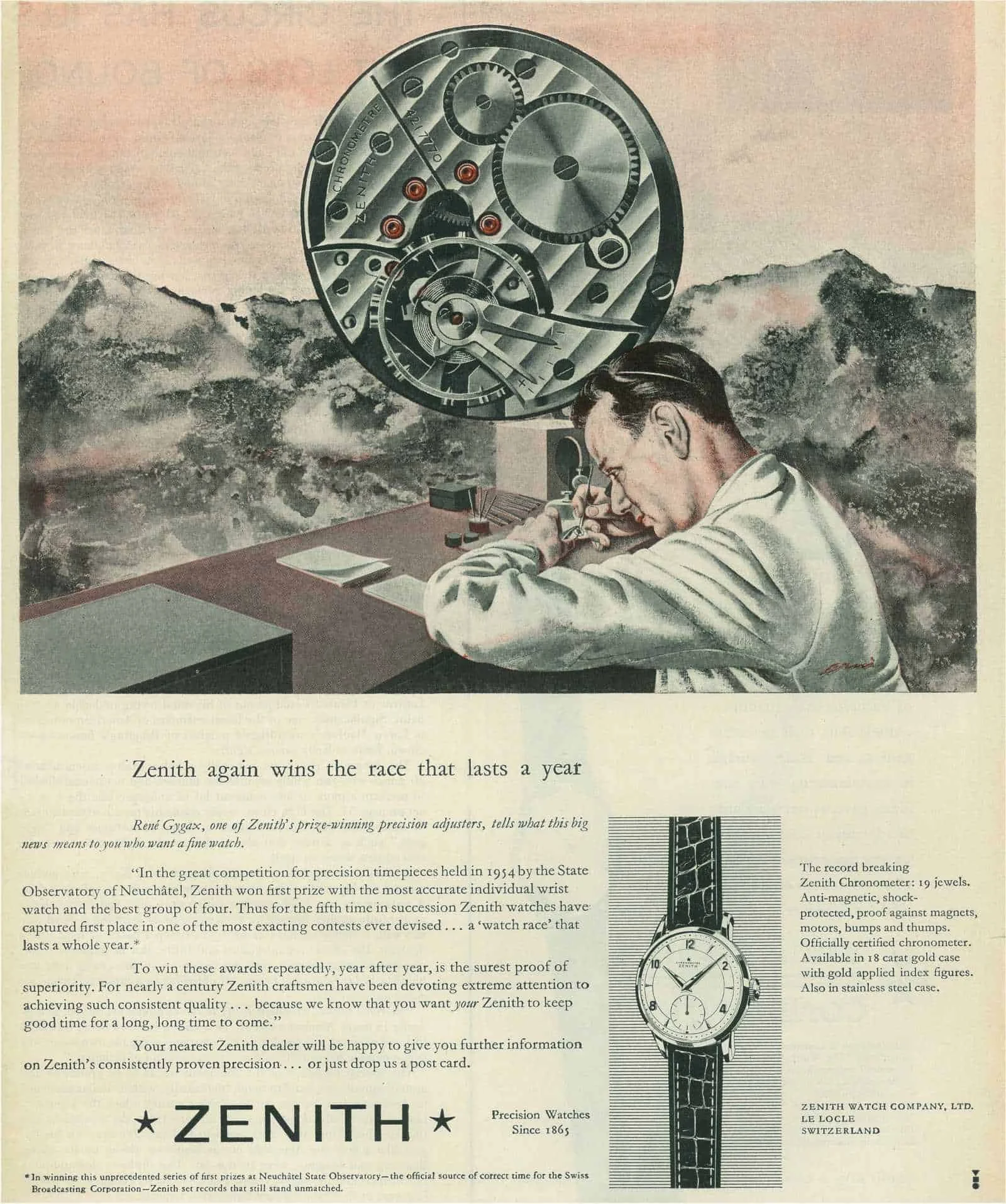
Image: ZENITH Heritage
Precision, as a concept, has changed its venue. In the 1950s, a first prize at Neuchâtel was evidence of something subjected to external verification, and a brand could point to it as proof. The G.F.J.'s plus or minus two seconds per day is a real number, better than COSC requires, but it exists in a context where the verifying institutions have been gone for decades and where watches communicate quality primarily through press coverage and resale value. Jobin's movement won its prizes in rooms where the criteria were clear and the judges were indifferent to aesthetics. The G.F.J. has to make its case in a different kind of room, which is why the lapis, the bloodstone, the onyx, and the hand-applied gold beads are doing argumentative work. Beauty is now what signals that seriousness was brought to bear. Zenith seems to understand this. The brick guilloché on the bridges and the dial is the manufacture's walls reproduced inside the watch, which is exactly the kind of move Favre-Jacot might have appreciated: everything under one roof, all the way down.
Whichever version you find yourself drawn to, you arrive at the same movement and the same underlying question. Zenith kept the plans for the 135 in a drawer for years, half-hoping someone would eventually ask to use them. Somebody finally asked. The watch that resulted is, among other things, a record that certain kinds of knowledge do not fade even when nobody is asking about them. That seems worth something, though I am genuinely uncertain whether the people positioned to spend CHF 49,000 to 74,000 on a dress watch are the ones most likely to understand why.
