

The Solvent Test for Watches

Somewhere in the last decade, watch collecting developed its own version of a solvent test. Hold the loupe up, angle the light, count the facets, the works. You've probably done this yourself. Enough brands have called an assembled movement a manufacture caliber, or dressed a plated bridge up as hand-finished, that suspicion became the reasonable default. This instinct comes from real experience.
Ken Sakata, who writes about fashion and design at his newsletter The Eye, recently asked whether we're being scammed by craftsmanship. His answer was more a diagnosis of how we learned to ask the question at all, and what that cost us. He argues premium and luxury goods are emotional products, and that 'the true value of them is not measurable in stitches and grams.' Once you stop believing that, the only thing left to chase is a number. I kept thinking about watches while I read it, as we built our own version of this years ago without ever naming it.
Sakata calls this gap craft-washing, the separation of what a thing actually is from a curated story of how it was made. It's a useful term because it names something specific. A company can signal every marker of craft, the atelier photography, the old hands at a bench, the heritage copy, while producing something with none of the substance those markers promise. Watches work the same way. In-house has meant different things depending on who's saying it, closely enough that Bremont had to walk back its own marketing in 2014 after calling the BWC/01 in its Wright Flyer watch an in-house movement designed and developed in Britain, once collectors traced the caliber's resemblance to an existing La Joux-Perret design and the brand clarified it had actually been developed jointly with its Swiss partner. Heritage gets claimed by brands with none of it.
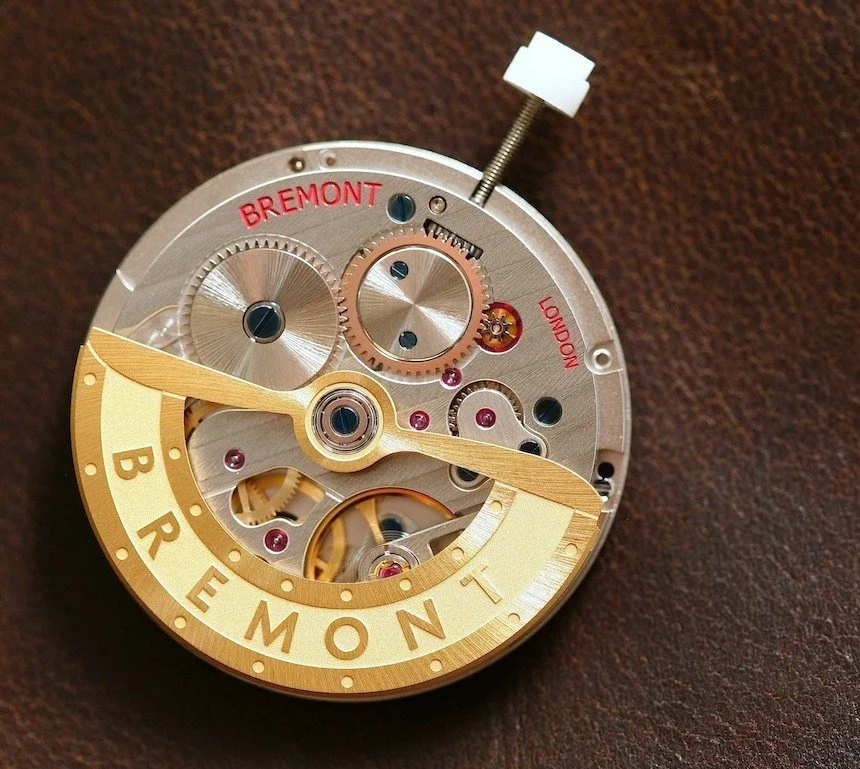
Image: A Blog to Watch
What gets lost in the correction is worth sitting with. Once finishing can only be defended by facet counts and hour totals, you stop asking what a decision was for and start asking only whether it can be counted. That flattens two different things into one number. A bevel cut as the case geometry demands it, and a bevel cut because bevels are what buyers expect, register identically on a spec sheet. The measurement can't tell you which one mattered.
This, however, creates a trap for watchmakers, especially the indies. A small maker has to prove, explicitly, things that used to just be part of how a good object got made. Say too little about process and the buyer has no framework to value the work. Explain it and it risks reading as marketing, the thing buyers have learned to distrust. There's no safe amount of explanation.
Tristan Ho, the watchmaker behind the Singaporean brand LOTH, told me he still believes in giving people as much information as possible about the work behind a watch, even the ones who end up deciding it isn't for them, though he admitted he's never actually had someone walk away from LOTH and come back later saying it changed how they looked at other brands. The principle holds even without the anecdote to prove it earned its keep.
What tends to happen instead is the work bends toward whatever is legible. A tool mark stays visible because that's what handmade is supposed to look like now, regardless of whether leaving it was the honest choice. Black polish shows up on a part no one will see. The finishing starts answering to buyer expectations more than to the movement's actual geometry. A maker whose real advance is a better technique or a smarter jig gets little credit for it, given that advance doesn't photograph the way an old man at a bench does.
So what's the actual test, if facet counts don't get us there?
I keep coming back to whether there's an explanation, and whether that explanation is mechanical rather than aesthetic. Why is this bevel cut at this angle. Why is this screw blued by hand instead of chemically. Why is this bridge finished at all when no one will ever see it. When the answer touches function, wear, or tolerance, the finishing is doing its job. When the answer amounts to this is what craftsmanship looks like, the vocabulary sounds right, hand-finished, artisanal, in-house, while what sits underneath it is a performance for someone who's been taught exactly what to look for. Beauty isn't the problem here. Some of the most convincing finishing in watchmaking is both dramatic and structurally necessary, on the grounds that the two were never actually separate. The failure is decoration standing in for a decision that was never actually made.
I wrote about this obsession itself last year for Unpolished Watches, tracing how anglage and black polish moved from a hidden technical detail to a public status signal, largely once sapphire casebacks and Instagram gave finishing an audience it never had. Independent watchmakers built identities around inner angles. Microbrands started offering visible hand-finishing under two thousand dollars because the market expected it, whether the price point could support the real thing or not. That piece closed on a line I still believe. The real question was whose hand did it, and to what end. A yes or no on hand-finishing tells you almost nothing, the same way a stitch count tells you almost nothing about a shirt. What matters is whether the finishing was a decision made for the movement, or for the person looking at it.
Picture two watches side by side, both advertised as hand-finished, both showing visible bevels and black-polished screws under a loupe. One comes from a maker who trained for years under a decorator, who can tell you why a bevel angle exists in relation to a bridge's edge, who finishes a part you'll never see because leaving it rough would affect how adjacent parts wear over decades. The other comes from a brand where a machine cuts the initial chamfer and a technician finishes the edge by hand for a few seconds, technically true to the claim while doing almost none of the actual work it implies. Nothing in the marketing distinguishes these two. Both say hand-finished. Both look the same under a loupe if you don't already know what you're looking for. The gap only shows up in the explanation, and only if someone asks for one, and only if the answer turns out to be mechanical rather than aesthetic.
When I asked Ho for an example of exactly this kind of invisible cost, he pointed to his own work. Most people who look at his movements notice the snailed ratchet wheels or the bridge architecture first, and when they do clock the anglage, he told me, "it just looks cool to them." What they don't register is how much longer it takes to "hand-finish bevels this wide compared to what you'd normally see on other watches." The detail is there whether or not anyone catches it. The extra hours don't show up in a photograph at all.
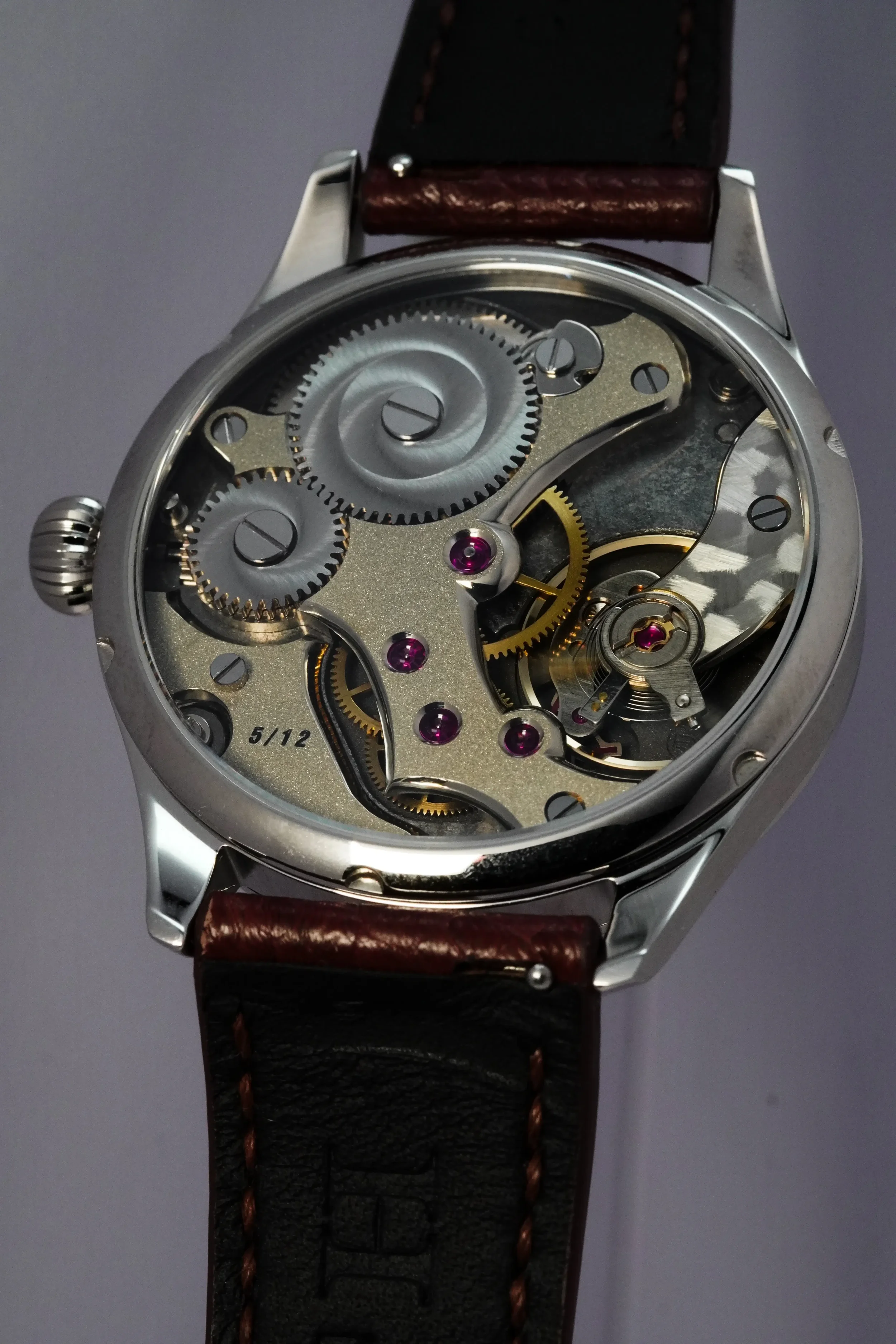
Image: LOTH

Image: LOTH
Sakata makes a related point about reductionism. He argues that once you decide any value beyond bare function must be either the product itself or marketing bolted onto it, real distinctions collapse into a false binary, as if history and skill were separable from the object rather than part of it. Done honestly, a watch's finishing carries the argument itself, expressed in metal instead of words. It's the same trap small weavers or denim makers face, in watchmaking's own vocabulary. Say too little and the buyer can't value what's different. Say too much, or say it wrong, and it reads as performance. The honest maker and the theatrical one end up using identical words, and you're left trying to tell them apart.
None of this means finishing should matter less, or that loupe culture deserves to disappear. The suspicion was earned, and scrutiny is what keeps the claim honest. But scrutiny that only counts facets will always miss the question, since a spec sheet can tell you that a decision was made without telling you why. The real test is whether an explanation exists for the choice, one that would still hold up if no one was ever going to see the part at all. That's what hand-finishing has always done in fine watchmaking, expressed as a decision made for the object rather than for whoever's looking at it. Take that away and the vocabulary still sounds right, but the substance underneath it never quite holds, and no amount of correct vocabulary changes what you're actually holding.
