

The Algorithm Is Curating Your Collection
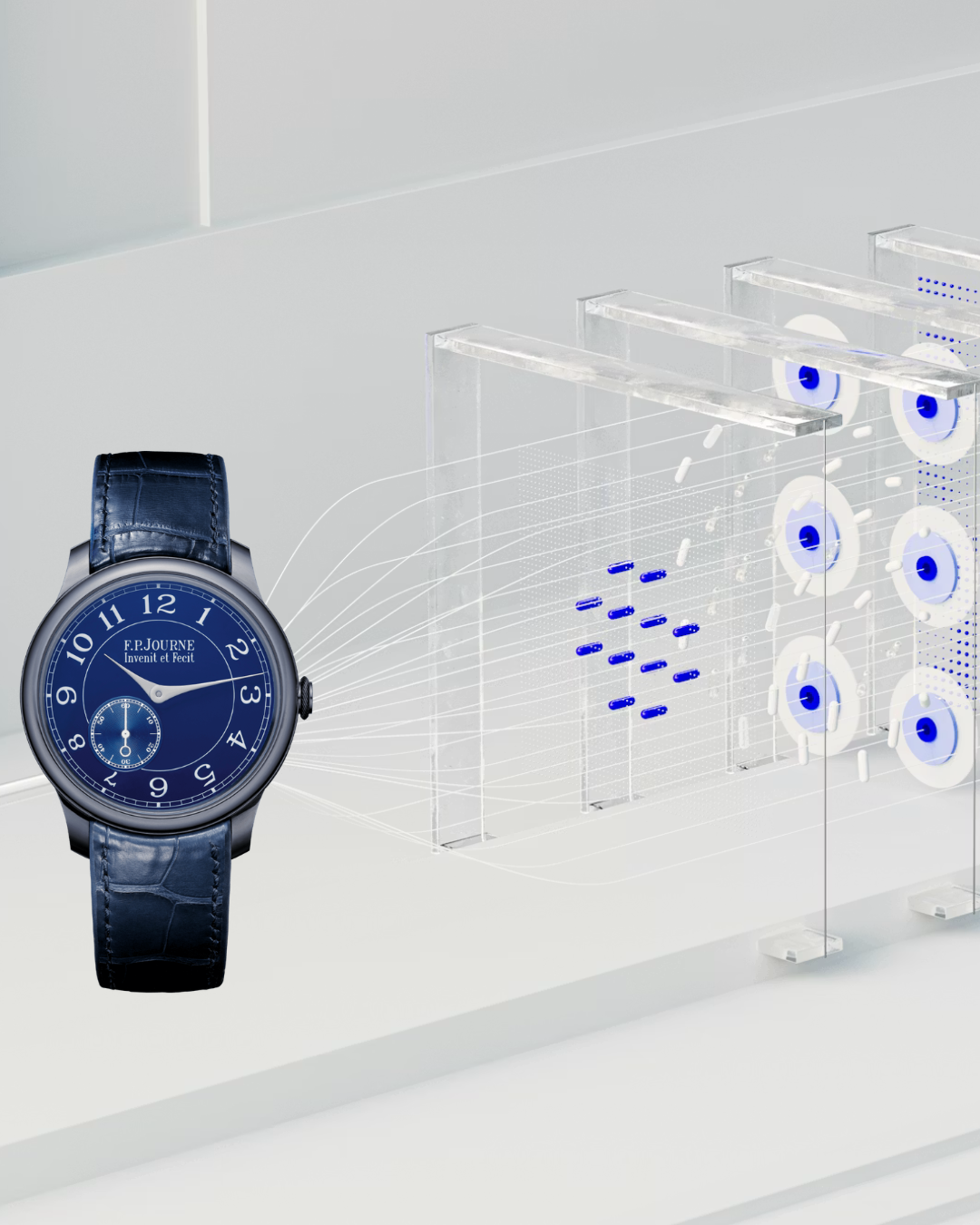
*Watch unrelated to anything (maybe)*
Every collector reaches a point, usually somewhere between the third late-night scroll through Chrono24 and the twenty-eighth saved post of a watch they swear they discovered ‘before everyone else,’ when they are forced to confront a mildly embarrassing truth, and that is their taste is not entirely their own. Not really. Not anymore. I don’t say this to be cruel or defeatist or to align myself with the usual old-guard chorus insisting that collecting peaked in the 90s-late 00s. I say it because it’s becoming harder to ignore how frictionless and homogenous taste has become in an era where the algorithm has assumed a role we once reserved for curiosity, chance, or the idle wandering of boredom. Social media has not just connected collectors. There is also a caveat. It has homogenised them. And the truly unsettling part is that we keep insisting we are making independent choices while the evidence suggests something closer to a collective gravitational pull, drawing us toward the same shapes and silhouettes, as if the entire hobby has narrowed into a self-cleaning corridor.
A decade ago, the phrase under the radar actually meant something. It referred to a watch that lived in a half-lit corner of the internet, in a forum thread nobody had updated since 2007, or in the second drawer of a watchmaker who still preferred to be paid in cash. Today, under the radar might as well be a preset category in the Explore tab. All it takes is one well-lit shot of a brushed titanium case beside an espresso, and the algorithm decides we all must want it. Within days, possibly hours, the supposed hidden gem becomes a shared discovery, a communal revelation, and suddenly it is everywhere. Your feed, your DMs, your group chat, your subconscious. And then, as if following a cosmic law, it is no longer a discovery at all. It becomes a trend.
This is the new speed of taste. What once took years, slow accumulation, word of mouth, small pockets of obsession forming around a reference nobody could properly remember, now takes a single viral story. The rise of Dennison is a perfect example. One moment, a microbrand with a design language that felt intentionally resistant to commercial optimisation. The next, an object lesson in how quickly the internet can convert ‘idiosyncratic’ into ‘coveted.’ There was a stretch last year when everyone seemed to be posting their Dennisons as if they had collectively decided to cosplay as independent-watch connoisseurs. It was not performative, not consciously, but the algorithm had created a safe aesthetic zone around it, something like a digital pheromone. Dennison suddenly was a signpost, a badge of taste. And because the algorithm amplifies whatever users hover over for a fraction too long, everyone was hovering.
None of this is a critique of any hot microbrand or independent brand that’s in the current ‘if you know you know’ rotation. They are not the problem. The problem is how quickly the internet lifts them out of their contexts and turns them into signifiers, as if taste were a race to declare oneself early but not too early. Social media compresses the discovery cycle, accelerates the hype cycle, and then discards nuance entirely. A Patek that was once a statement of restraint becomes a meme object for thirty days. A 34mm oddball from the 80s becomes the thing you must post right now. And by the time you finally decide to buy one, after convincing yourself you arrived at the idea through a chain of private reasoning, you look around and realize that everyone else has also bought one, or is about to.
This is how the monoculture forms. Not with malice or intent, but with repetition. The more the algorithm sees us react to a certain shape, the more it shows us that shape. The more it shows us that shape, the more natural or inevitable that shape begins to feel. Taste becomes a kind of feedback loop. The algorithm guesses what we want, therefore we reward it by looking, it then interprets our looking as wanting, and we interpret its repetition as validation. Slowly, almost imperceptibly, our preferences shift to match the average of everyone else’s. It is no different from the way pop music converges around a handful of sonic templates or how film posters start to look like variations of the same color palette. When the distribution channel optimises for engagement, everything begins to converge on whatever proved engaging last week.
Watch collecting, for all its claims to individuality and personality, is drifting toward this same gravitational centre. The monoculture is not defined by which watches are popular at any given moment, since that has always been fluid. It is defined by how narrow the definition of good taste has become. Everyone’s grail is suddenly the same handful of references: a specific Tank, a specific indie darling, a specific neo-vintage chronograph with a manually wound movement from a specific era you can practically recite from memory. Even the attempt to be different now looks identical. Everyone wants the watch everyone else thinks nobody else knows about. The race to the edges has become the race to the same edge.
Before social media, personal taste was shaped by a mix of randomness and constraint. You would stumble into a shop, meet a collector with esoteric opinions, or spend your late nights on forums. The watches you discovered became part of your taste precisely because you found them yourself. Not because they were good or rare or aesthetically pure, but because you had the time to let them imprint on you. They became personal by virtue of the path you took to reach them. Now, the path is pre-built. There is a pre-curated universe of acceptable ‘personal’ choices, and the algorithm ensures we spend most of our time inside that universe. Even when you try to be original, you are choosing from a menu someone else wrote.
The irony is that collectors are more informed than ever. We know more about movements, case geometry, historical context, and finishing techniques than most collectors from any previous era. But information abundance does not guarantee taste diversity. If anything, it encourages convergence. When two hundred thousand people are exposed to the same persuasive argument for the same obscure reference within the same seventy-two-hour window, it becomes harder to maintain that you arrived there independently. Knowledge used to differentiate collectors, but now it standardises them.
We talk a lot about taste as if it were something we cultivate internally, a set of preferences we arrive at after enough exposure to the world. But the algorithm has trained us to conflate repetition with preference. If you see enough photos of a certain watch styled a certain way, always placed next to the same espresso cup, the same turtleneck, the same desk setup, you start to internalise it as something desirable. At first you may resist. You may think you are above the discourse. But then comes the second wave, and the third, and eventually your aesthetic defences soften. This is not a failure of individuality, but a function of human cognition. Repetition shapes preference. Familiarity feels like inevitability.
Now, let me bring up an uncomfortable question. If personal taste is so vulnerable to the gravitational pull of the algorithm, is there such a thing as personal taste anymore? Or are we all simply curating variations of the same feed, mistaking minor deviations for individuality? I am not suggesting that everyone secretly wants the same watch. I am suggesting that we are being nudged toward similar clusters of desire, and the moment something breaks out of those clusters, it is immediately absorbed into them. The algorithm is not only predicting our taste, but it also constrains the perimeter within which taste can operate.
And so here we are, in a moment where everyone’s collection looks suspiciously similar. The same independents. The same modestly sized neo-vintage pieces. The same vintage Cartier. The same three stainless-steel chronographs. The same dash of quirk for ‘balance.’ You can scroll through fifty collections and feel like you are seeing the same choices styled in different lighting conditions. These collections are not bad. They are, for the most part, tasteful and considered and well-built. But they are not personal in any meaningful sense. They are merely well optimized.
Which brings us to the question of what to do next. How do you reclaim personal taste in an ecosystem designed to streamline it? I am not suggesting you erase your feed or abandon the internet or pretend you do not know what everyone else knows. That ship has sailed. What you can do, and what you must do if you want to be more than a proxy for the algorithm, is deliberately cultivate friction. Seek out the discomfort of wanting something the algorithm does not reward. Buy the watch that looks slightly wrong, slightly off, slightly mismatched with the conventions the internet has trained you to consider ‘clean.’ Find the piece that does not photograph well. The one you cannot easily explain. The one your friends will not immediately validate. The one that makes the Explore tab go quiet.
Buy something ugly.
Not deliberately ugly, not ironically ugly, not meme ugly. I mean taste-ugly. Algorithm-ugly. The ugly that challenges your assumptions in a way that feels both slightly embarrassing and inexplicably magnetic. You do not have to love it at first. You do not even have to understand it. But you have to give it time. You have to let it work its way into your aesthetic vocabulary in a way that no viral post ever could. The algorithm hates slow burns. It hates ambiguity. It hates anything that resists being flattened into consensus. Which is precisely why you should lean into them.
If you want a collection that actually reflects your sensibilities, whatever remains of them, then you need to step outside the gravitational field. Ignore the wave of enthusiasm. Ignore the trending tab. Ignore the sudden flood of discourse declaring that a specific reference is now the thinking person’s choice. You do not have to reject good watches. You simply have to choose them on your own timeline. You have to rediscover boredom, curiosity, chance. You have to let taste marinate instead of percolate.
You need watches that do not make sense to anyone but you.
A slightly too-thin 70s dress watch. A quartz piece with an awkward dial layout. A neo-plastic experiment from a brand nobody respects. A watch with hands that look one size too small. Something asymmetric. Something oversized. Something last produced in 1983. Something the algorithm will never recommend because no one spends enough time looking at it for the machine to register interest.
Collecting once was a dialogue between you and the object. Now it is a negotiation between you, the object, and the statistical preferences of several million strangers. The only way to restore that dialogue is to reintroduce scarcity, not of supply, but of influence. You have to limit the number of hands shaping your taste. You have to make room for the part of your brain that does not care what others think and has not been given the chance to speak in a long time.
If there is a future for personal taste in collecting, it will not come from hiding gems or discovering them early or being first to market with the next micro-independent. It will come from developing the discipline to want something unfashionable, the humility to pursue it quietly, the courage to sit with it long enough for the relationship to become real, and the willingness to let taste emerge from within rather than be delivered through a feed.
