

Has Watch Culture Lost Its Critical Nerve?

Image: Espiral do Tempo
A user left a comment on a recent Instagram reel by @wristenthusiast, attached to a clip of the Ulysse Nardin Freak in motion, and it settled into the thread with the certainty of a verdict already reached. The comment was: 'It looks like it should cost £140.' The sentence required no argument and invited no correction. It simply reported what the eye had already decided. What it revealed went beyond one person's misjudgement of one watch. It exposed a habit that has come to define watch culture more broadly, and that is seeing quickly, concluding confidently, and defending that conclusion from scrutiny with the same ease that it was formed.
Watch enthusiasts have an attitude problem. A structural failure that runs through the culture so completely that most people inside it sometimes have stopped being able to see it.
The failure is this: opinions form before understanding has had any chance to develop. An unfamiliar piece appears on a screen and a verdict arrives almost immediately, carrying the texture of recognition, as though the judgment had been sitting there all along, waiting to be confirmed. In the logic of a comment thread, or a forum post, or a group chat, that speed reads as authority. The faster the opinion arrives, the more informed it appears to be.
Psychologist Daniel Kahneman spent much of his career describing exactly this mechanism. The mind, he argued, is built to generate the most coherent story it can from whatever information happens to be in front of it, and it does this so quickly and fluently that the story feels like careful assessment rather than what it actually is, a rapid confection assembled from available cues. He called this heuristic, What You See Is All There Is. The mind does not pause to ask what it might be missing. It takes what it has, constructs the most plausible account, and delivers that account with complete confidence. Watch culture has built its entire comment ecosystem on this tendency, and called it taste.
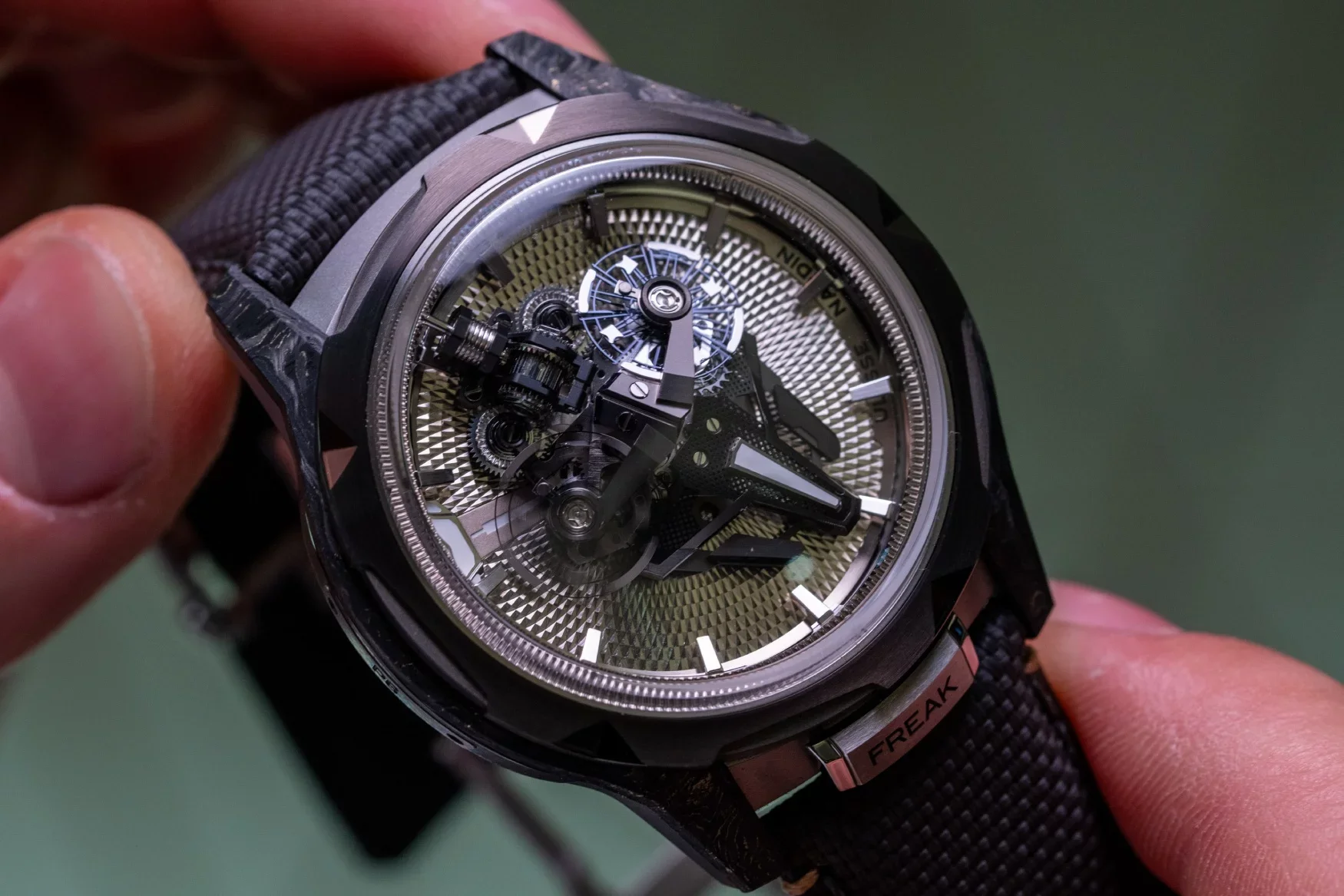
Image: Time+Tide
The Ulysse Nardin Freak is a useful object to think with here. Introduced in 2001, it was one of the most consequential horological statements of its generation. It has no conventional dial. It has no hands in any traditional sense. The entire gear train rotates around the chapter ring, completing one revolution per hour, functioning simultaneously as the mechanism and the display. The silicon escapement it helped bring to series production changed the direction of the industry. The case opens from the back crown. The front crown, where a conventional watch would set the time, instead regulates the rate directly. Every decision in the Freak contradicts assumptions that watchmaking had held for centuries.
The typical audience size for the Freak, from someone encountering it without context, is a low number. Something that sounds like a price more appropriate to a fashion watch than to one of the more radical mechanical objects produced in the last thirty years. And the person delivering that response is not being dishonest. They are doing something that feels entirely reasonable. Scanning for familiar reference points, finding fewer than expected, and translating that unfamiliarity into a valuation. The logic underneath the process runs roughly like this: I do not recognise this as a serious object because it does not look the way serious objects look, therefore it probably is not one. The object is being judged by the standards it was explicitly designed to abandon, and the person doing the judging has not noticed that the standards needed updating.
This habit of reaching for a template of what a luxury watch should look like and measuring everything against it, surfaces whenever something genuinely unfamiliar enters the conversation. A watch without conventional hands, without a dial in any recognisable sense, without the visual grammar that signals value to an eye trained on more traditional references, gets processed not as something requiring investigation but as something already understood. The unfamiliarity becomes the conclusion. The eye finds no foothold and the mind fills the gap with a verdict, and the verdict tends to be dismissive, because the assumption running underneath the whole process is that anything worth taking seriously would have been legible from the start.
What this produces, across a culture of many thousands of people repeating the process simultaneously, is an environment organised around a very narrow idea of what a serious watch looks like. Anything that fits the template gets evaluated. Anything that does not gets dismissed before evaluation begins. The person doing the dismissing rarely notices that this is what they are doing, because the dismissal arrives wrapped in the feeling of having assessed something rather than the feeling of having avoided assessing it.
The other dominant habit works in the opposite direction but from the same underlying place. Watch culture has developed a specific mode of defence around watches that have achieved mainstream recognition, the kind of recognition that comes not from horological significance but from cultural visibility and the gravitational pull of a name that people outside the hobby also know. Around these watches, criticism tends not to be engaged with. It gets set aside on the grounds that the market has already delivered its judgment. The watch is beyond question because it is beyond question. Anyone raising a technical or comparative objection is understood to be missing something more important: that these objects have been ratified by collective wanting, and that collective wanting is treated as a form of closure.
The defence tends to frame itself in terms that sound like wisdom. You are missing the point. You are thinking about this too narrowly. Watches are not just about movements. You have to understand what these objects mean beyond the specifications. All of this is true in the abstract. Watches are not just about movements. Meaning matters. Cultural context matters. But these truths get deployed not to enrich the conversation but to end it, to position the person asking questions as someone who has not yet reached the level of understanding at which the mainstream choice becomes obviously correct. The defence flatters the person making it and dispenses with the question without ever addressing it, and watch culture has become so accustomed to this move that the dispensation reads as maturity and the original question reads as naivety.
Both habits rest on the same foundation. The instant dismissal assumes that an unfamiliar watch has already revealed everything worth knowing about itself. The automatic defence assumes that a familiar watch has been understood so thoroughly by the culture at large that further examination is redundant. In both cases the conclusion precedes the inquiry. In both cases, confidence is performing the role that understanding has not been asked to fill.
The collectors who have retained the most critical nerve tend to be people whose relationship with watches is less mediated by the desire for the objects to validate something about them. They came through mechanical curiosity, or through history, or through a genuine interest in how these things are made and why certain decisions were taken. They are the people most likely to say, in a room full of reverent approval, that a movement's finishing is worse than the brand's previous generation, or that a case design being celebrated as innovative is a close adaptation of something produced decades earlier. They are also the people most likely to be told that they are missing the point, which is a particularly revealing accusation when it lands on someone who has done the work, because the person who has done the work is precisely the one most capable of identifying what the point actually is.
Good criticism starts with curiosity. That sounds simple enough to be obvious, but it describes something that the dominant habits of watch discourse are specifically organised to prevent. Curiosity requires holding a judgment in suspension long enough to ask what an object is actually doing, which means tolerating the discomfort of not yet knowing. Watch culture does not reward that tolerance. It rewards the person who arrives first with a verdict, a confident line that signals familiarity with the territory. The person who says they need to look more carefully before they can say anything useful is not performing the right thing, even when they are doing the right thing.
Kahneman observed that people are generally not aware of their own ignorance because the mind does not generate a signal when information is absent, only when information is present. The shortcut exploits exactly this. The fluency of the verdict gets mistaken for the depth of the knowledge behind it, and because the mistake happens below the level of conscious awareness, it rarely gets examined. The person who reached for the shortcut experiences the output as genuine assessment, which is precisely what makes the habit so difficult to dislodge.
The raw material for a serious critical culture is present and has never been more abundant. Books, archives, communities of people who have spent decades in close contact with these objects: the resources available to someone who wants to develop genuine knowledge are more accessible than at any earlier point in horological history.
What is missing is the disposition to use them. The disposition that treats a confident aesthetic verdict as the beginning of an inquiry rather than its conclusion. The disposition that finds in someone else's well-supported disagreement an opportunity to think more carefully rather than a provocation to defend what was never fully examined. The disposition that asks, when a watch looks unfamiliar, whether that unfamiliarity might be the point rather than the problem, and asks, when a watch seems beyond critique, who decided that and on what grounds.
Across the culture, from the person who prices something at a fraction of its worth on first glance, to the person who waves away every serious question about a beloved reference, the underlying move is the same. A conclusion arrives before the inquiry has begun, and the conclusion is then experienced as understanding. That experience is what a culture without critical nerve produces. Not hostility to thought. Just an absence of appetite for it, so complete and so widely shared that it no longer reads as absence at all. It reads as taste, which is the second most effective disguise that ignorance has ever found, after confidence.
